Why Centralized Visibility Is Key to Multi-Market Customer Acquisition
Expanding into new markets is a natural goal for any growing business. But the moment you start targeting customers in multiple regions or cities, a familiar problem emerges: how do you keep track of what is working and what is not? Without a single, clear view of your efforts across every location, it is easy to waste time and budget on tactics that only seem effective in isolation.
This is where the idea of centralized visibility becomes essential. It means having one system that shows you how your customer acquisition channels are performing in each market, side by side. Instead of juggling spreadsheets, separate dashboards, or reports from different teams, you get a unified picture. That clarity makes it possible to spot real opportunities early and shift resources where they will have the most impact.
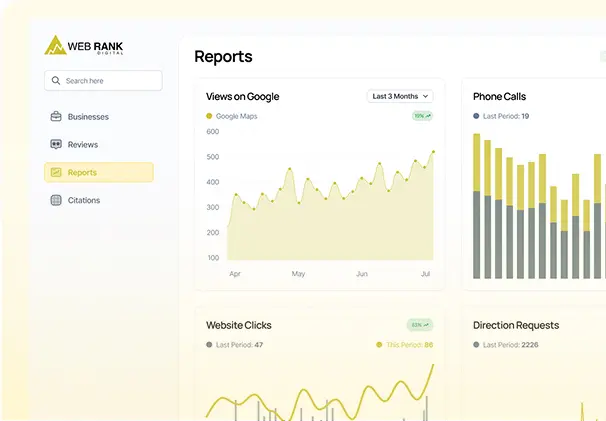
When you operate in several markets at once, the differences between them can be striking. A campaign that works well in one city may fall flat in another because of local preferences, buying habits, or even seasonal demand. Without centralized visibility, you might keep pouring money into a region that looks promising on its own but is actually underperforming compared to others. Worse, you could miss a rising opportunity in a market where your competitors are already gaining ground. Tools like those offered by webrankdigital.com help businesses avoid this by pulling data from multiple locations into one view, making it easier to compare performance and adjust quickly.
The challenge is not just about seeing numbers. It is about understanding the story behind them. For example, a sudden spike in leads from one city might be driven by a local event or a seasonal trend, not a permanent shift in demand. With a centralized reporting system, you can dig into that data and see whether the change is worth acting on or just a temporary blip. The same logic applies to drops in performance: without a single source of truth, you might blame the wrong channel or waste time investigating a problem that is actually isolated to one region.
How Centralized Visibility Works in Practice
At its core, centralized visibility is about connecting the dots between your market intelligence, competitor analysis, and lead tracking. Instead of each function living in its own silo, they feed into a common dashboard that updates in near real time. That means when your team spots a shift in regional demand, they can see immediately how it affects your lead generation numbers across every active location.
This setup relies on scalable workflows. As you add new markets, the system should be able to accommodate them without requiring a complete overhaul of your reporting structure. The goal is to maintain campaign consistency while still allowing for local customization. For instance, you might run the same core ad creative across several cities but adjust the copy or offer based on local language or culture. With centralized visibility, you can track how each variation performs and decide which elements to standardize and which to keep tailored.
Another key piece is location targeting. When you run campaigns across multiple regions, you need to know not just which ads are clicked but which clicks turn into real leads or sales. A centralized view lets you trace a lead from its first touchpoint all the way to conversion, no matter which market it came from. That kind of attribution is difficult when each market has its own separate tracking system, because you end up comparing apples to oranges. Standardizing the metrics across all locations removes that confusion.
What It Means for Your Growth Strategy
Having centralized visibility changes how you think about market expansion. Instead of treating each new region as a separate experiment with its own goals, you see them as parts of a larger system. This makes it easier to allocate budget, test new channels, and replicate what works. If a particular customer acquisition channel performs well in two similar markets, you can scale it faster in a third without starting from scratch.
It also helps with managing risk. Every market has its own set of challenges, from regulatory differences to local competition. When you have a clear view of all your markets at once, you can spot a problem early and respond before it affects your overall pipeline. For example, if one region suddenly becomes more expensive to advertise in, you can shift spend to another area where returns are still strong. That kind of agility is hard to achieve when each market is managed in isolation.

For teams that are used to working with separate dashboards, moving to a centralized system can feel like a big change. The payoff, however, is a much clearer understanding of where your next best customers are coming from. Instead of guessing which market to prioritize, you have data that shows you the real picture. This is especially valuable for businesses that are scaling quickly and need to make decisions fast.
Common Pitfalls to Watch For
Even with the right tools, centralized visibility only works if you use it consistently. One common mistake is setting up a dashboard and then ignoring it, or checking it only when something seems wrong. The real value comes from making it part of your regular workflow, such as a weekly review of performance across all markets. Another pitfall is trying to track too many metrics at once. Focus on the numbers that directly relate to customer acquisition, such as cost per lead, conversion rates, and lead quality. Adding too many vanity metrics can clutter the view and make it harder to act.
Another issue is data quality. If your lead tracking or competitor analysis feeds are inaccurate, the centralized view will be misleading. It is worth investing time upfront to make sure every source of data is clean and consistent. That includes standardizing how you define a lead, a qualified lead, and a conversion across all markets. Without that consistency, your reports will create more confusion than clarity.
Making the Shift
Getting started with centralized visibility usually means choosing a platform that can integrate with your existing tools and pull data from multiple sources. The system should handle the heavy lifting of combining data from different customer acquisition channels, so your team can focus on analysis and action. As you scale into new regions, the same setup should be able to accommodate them without a lot of extra work.

One tip is to start with your two or three most important markets and build the centralized view there before adding others. This lets you refine the process and see the benefits early, which makes it easier to get buy-in from the rest of the team. Over time, the habit of looking at a single, unified report becomes second nature, and the insights you gain will guide where to expand next.
For businesses that are serious about multi market optimization, centralized visibility is not a luxury. It is a practical necessity. Without it, you are flying blind in some of your most important regions. With it, you can make smarter bets, respond faster to changes, and ultimately grow your customer base more efficiently. That is why more companies are turning to platforms that offer this kind of unified view, and it is a trend that will only continue as competition across markets intensifies.